
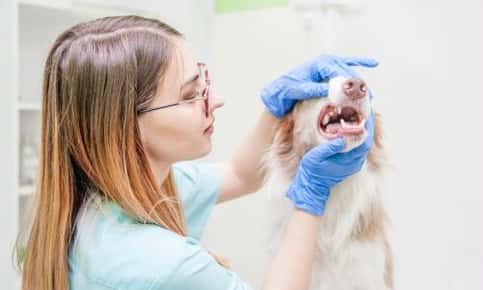
10 Reasons Why You Should Schedule a Dental Exam for Your Pet During Pet Dental Month
Pet dental month, held every February, highlights the importance of dental care for our furry friends. Tooth decay, gum disease, and other oral health conditions don't just affect people, they may also be an issue for pets. Fortunately, regular checkups can help prevent these problems and also provide important benefits for your pet's oral and general health. Check out a few reasons why a pet dental exam should be on your calendar this year.
1. Cavities Aren't Always Obvious
Your dog's teeth may look fine, despite decay lurking just under the surface. (Luckily, cats rarely get cavities.) Brown or black spots or holes usually appear only when tooth decay is fairly widespread. By the time you notice a cavity, it may be too late to save the tooth. Yearly dental examinations help your veterinarian diagnose and treat cavities when they're still small.
2. Gum Disease Is a Common Problem for Pets
The American Veterinary Medical Association notes that many pets have evidence of periodontal (gum) disease by the time they're 3 years old. Symptoms of gum disease include redness, swelling, drooling, dropping food, bleeding, and bumps on the gums. As the disease worsens, pets may chew on one side of the mouth or even avoid food. If untreated, the painful disease can cause teeth to fall out and may even result in fractures in your pet's jaw.
3. Your Pet May Be Suffering in Silence
In the wild, predators target other animals that are weak or hurt. Despite the fact that your pet has a comfortable life in your home, natural instincts drive him or her to conceal pain or illness.
Even though your pet displays no symptoms, he or she may be in constant pain due to a dental issue. Unfortunately, if your cat, dog, rabbit or other small animal doesn't receive a dental exam, you may never know that your friend is suffering.
4. Dental Exams Can Reveal Unexpected Problems
Tooth decay and gum disease aren't only oral health issues that affect pets. Gnawing on hard objects can damage teeth, causing small cracks that aren't obvious. Painful abscesses can form deep inside your pet's gums, teeth or jaws. In addition to causing considerable pain, abscesses can damage bones and ligaments and trigger or worsen other health problems.
5. Small Problems Are Easier to Treat Than Big Ones
Whether your pet has tooth decay, gum disease, an abscess, or another condition, prompt treatment is the key to resolving dental issues. Yearly dental examinations detect dental conditions when they're still fairly minor and less complicated to treat.
6. Regular Exams Allow Your Veterinarian to Spot Specific Issues Related to Type or Breed
Your pet's breed or type may increase the risk of developing certain dental conditions. For example, tooth resorption is a common dental condition in cats. The condition causes tooth loss and affects 20 to 60 percent of cats, according to Cornell Feline Health Center.
Rabbits need regular dental examinations to ensure that they're not experiencing tooth overgrowth, while dog breeds that tend to have crowded teeth may need more frequent dental cleanings.
7. Teeth Cleaning Protects Your Pet's Oral Health
Cleaning your pet's teeth and gums removes plaque and tartar, two substances that play a role in decay and gum disease. During a dental cleaning, your pet's veterinarian removes plaque and tartar deposits above and below the gum line.
8. Breath Odor Improves After a Cleaning
Do you avoid close contact with your pet because of his or her breath? The odor may be due to the bacteria present in plaque and tartar. After a dental cleaning, you'll notice a dramatic improvement in your pet's breath.
9. Dental Care Helps Your Pet Stay Healthy
Gum disease and abscesses can increase your pet's likelihood of developing diabetes or heart, liver or kidney disease. The risk rises when bacteria enter your pet's bloodstream and travels to other parts of the body. Dental cleanings and prompt treatment of dental problems will help reduce your pet's risk of these serious health conditions.
10. Your Pet's Disposition May Improve
Painful teeth and gums can affect your pet's behavior. Once dental problems are treated, you may notice that your pet is much happier.
Is your pet due for a dental exam? Call us to schedule a convenient appointment.
Sources:
American Veterinary Medical Association: Pet Dental Care